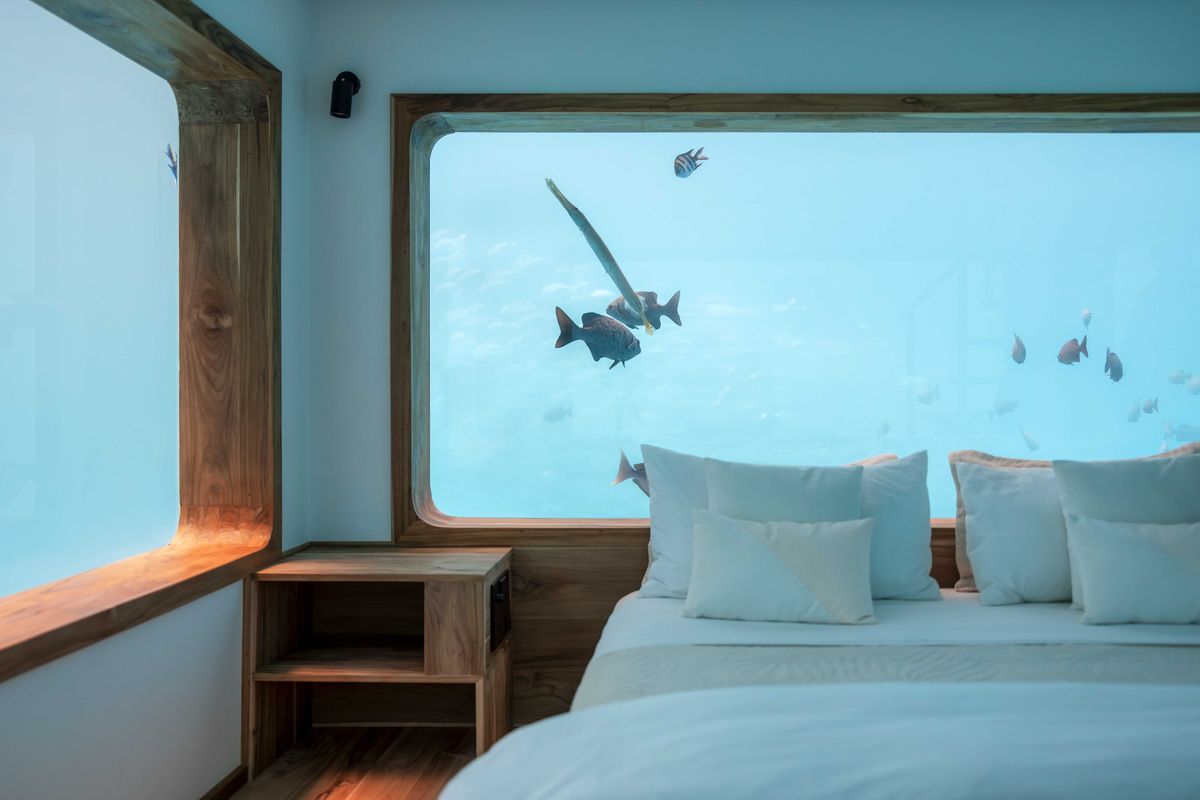
The Manta Resort has opened its new Underwater Room off Pemba Island, Tanzania—a third-generation redesign of the submerged accommodation it first launched in 2013. CEO and co-founder Matt Saus says the property worked with Genberg Underwater Hotels to refine the structure after twelve years of guest data and operational lessons, improving durability, safety, and environmental impact.
The original room, decommissioned after its run, now sits on the seafloor as artificial reef habitat. The replacement sits anchored in the same marine reserve, offering floor-to-ceiling views of coral and pelagic fish from a bedroom four meters below the surface. Guests access the room via a floating platform with above-water lounge and bathroom facilities.
All revenue from the Underwater Room flows to Blue Alliance, funding coral nursery projects and sustainable livelihood programs for local fishing families. Saus frames the model as regenerative tourism: "A very small footprint can still create meaningful impact. This project has always been about more than just creating a unique place to stay. It shows how tourism and innovation, when carefully managed, can contribute to protecting marine ecosystems and supporting coastal communities."
Pemba Island, less trafficked than neighboring Zanzibar, is drawing eco-luxury travelers with dive sites, mangrove channels, and community-based cultural tours. The Manta Resort counts the Underwater Room among a portfolio that includes beachfront villas and garden suites, with rates starting around $1,500 per night for the submerged experience.
The broader trend: Hospitality operators are tying high-margin experiential stays to conservation outcomes, using premium pricing to fund reef restoration, wildlife corridors, and community development. The Manta Resort's approach—direct revenue allocation and habitat creation—offers a template for properties in marine and terrestrial protected areas looking to justify tariffs and differentiate inventory.