Miami-born sushi concept OMAKAI is stepping outside Florida for the first time, announcing two Chicago openings — a 66-seat flagship nigiri restaurant in Fulton Market and a 30-seat hand roll bar in River North — alongside new leases in Orlando and Miami's Brickell district, marking the broadest single expansion in the brand's seven-year history.
The Chicago Footprint
The Fulton Market unit, at 951 W Fulton Market, will house 66 covers on the main floor plus a basement bar, positioning OMAKAI alongside some of Chicago's densest concentration of chef-driven dining. The River North hand roll bar, at 507 N Wells Street, seats 30 guests directly at the counter — a format that keeps fish-to-hand time minimal and nori texture intact, the hallmark of the hand roll genre. Both locations are targeting a 2026 year-end debut, offering lunch, happy hour, and dinner service. OMAKAI's 'Homeakase' sushi boxes — chef-selected nigiri and hand rolls packaged for takeout — will also be available via UberEats at both addresses, extending the brand's reach beyond on-premise covers.
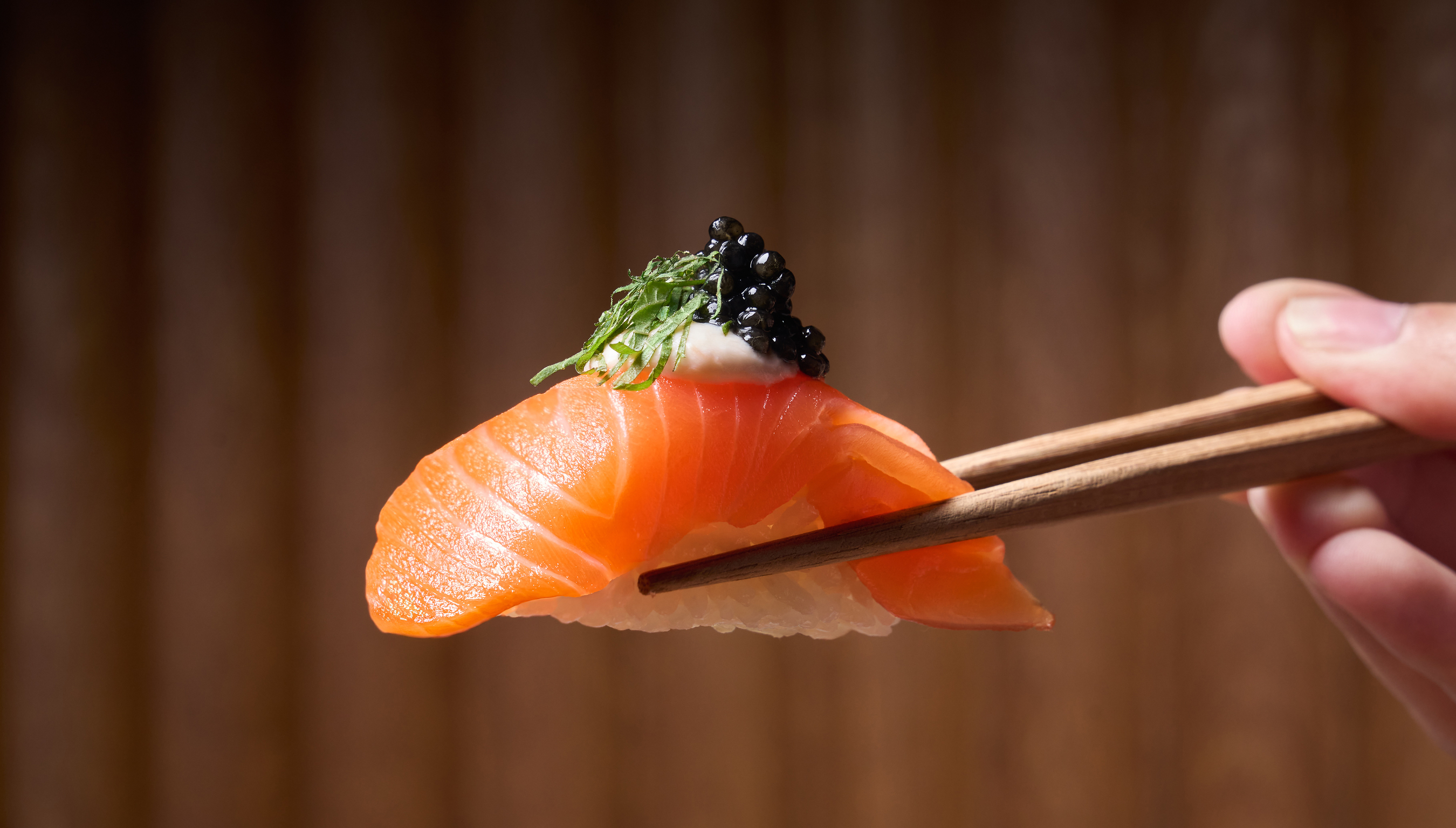
The expansion reflects broader momentum in accessible omakase as a foodservice segment. Where traditional omakase commands $150–$300 per guest at counter-only tasting rooms, concepts like OMAKAI are compressing price points while maintaining species quality — typically salmon, tuna (including negi-toro preparations), yellowtail, and seasonal nigiri selections — to reach a wider dining demographic. That positioning has fueled rapid unit growth across markets that once skewed toward high-end Japanese specialists.
Species and Supply Chain
At the heart of OMAKAI's program is sourcing quality sushi-grade finfish — primarily Atlantic salmon, bluefin and yellowfin tuna, and amberjack — at volumes consistent enough to support multi-unit consistency. Scaling from five South Florida locations to eight or more units across two states and two major metro areas raises procurement complexity: sushi-grade fish requires tight cold-chain management, typically arriving fresh or FAS (frozen-at-sea) and sliced in-house to order. Operators in the accessible-omakase segment increasingly work with specialist distributors who can guarantee species-level traceability and consistent fat content for nigiri cuts — a supply-chain discipline that separates scalable concepts from single-location sushi bars.
Diego Quijada, founder and CEO of OMAKAI, framed the Chicago entry as a community-driven milestone: "Expanding beyond Florida for the first time is a defining moment for everyone who has been part of the OMAKAI journey. We can't wait to introduce a whole new community to accessible omakase, with warm rice, crispy nori and kind service every single time."
What It Means for Operators
For seafood-focused foodservice operators, OMAKAI's trajectory is a useful benchmark. The brand launched in Wynwood in 2019 and built its South Florida network — Coconut Grove, Doral, Aventura, Downtown Miami — before attempting interstate expansion. The dual-format strategy (full nigiri bar plus hand roll bar) allows OMAKAI to enter markets at different real-estate footprints and price tiers simultaneously, widening its addressable consumer base without cannibalizing existing units. Competitors in the hand roll category — many concentrated on the coasts — will watch the Chicago test closely as a read on whether accessible omakase can sustain in a landlocked Midwest market with less embedded Japanese-food culture than Los Angeles or New York.
Reservations for existing locations are available at omakai.com. Exact opening dates and hours for the Chicago, Orlando, and Brickell units will be confirmed in the coming weeks. For broader context on omakase-format growth and seafood-focused restaurant trends, or the cold-chain logistics behind multi-unit sushi scaling, see related Crabs Blue coverage.
Written by Michael Politz, Author of Guide to Restaurant Success: The Proven Process for Starting Any Restaurant Business From Scratch to Success (ISBN: 978-1-119-66896-1), Founder of Food & Beverage Magazine, the leading online magazine and resource in the industry. Designer of the Bluetooth logo and recognized in Entrepreneur Magazine's "Top 40 Under 40" for founding American Wholesale Floral, Politz is also the Co-founder of the Proof Awards and the CPG Awards and a partner in numerous consumer brands across the food and beverage sector.