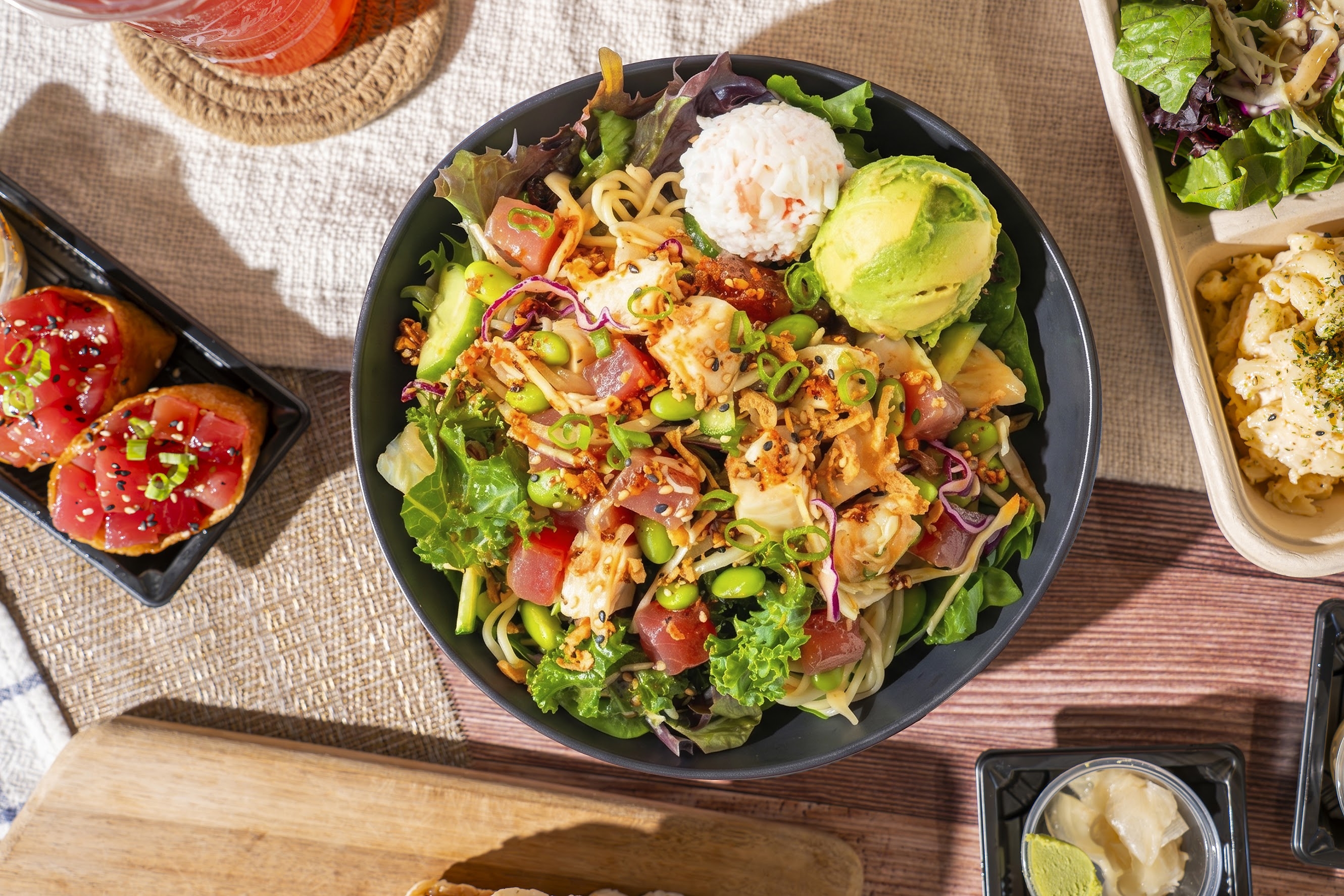
Pokeworks, the Irvine, California-based fast-casual chain built around customizable poke bowls and burritos, has added a High-Protein Surf & Turf Bowl to its menu for a limited time beginning June 16, 2026. The entrée centers on ahi tuna — a staple of the poke segment — paired with chicken breast, and delivers 44 grams of protein and 10 grams of fiber per serving.
No dockside weight or sourcing volume was disclosed. The bowl's ahi tuna component places it squarely in the fast-casual raw-fish segment, where yellowfin and bigeye tuna remain the dominant species. Poke chains have historically sourced a mix of fresh and IQF sashimi-grade tuna, with head-off, skin-off loins the standard commercial form for foodservice preparation at this scale.
Ahi tuna supply has faced periodic pressure from shifting Pacific quota allocations and elevated ex-vessel values tied to strong retail and foodservice demand. The Western and Central Pacific Fisheries Commission continues to manage yellowfin and bigeye stocks under effort-based measures, and MSC-certified tuna supply remains a competitive differentiator for operators seeking traceable, sustainability-credentialed product. Fast-casual poke chains occupy a middle tier between sushi restaurants and grocery grab-and-go, drawing from similar import and broker channels. For context on how raw-tuna supply dynamics affect foodservice buyers, see our recent coverage of tuna sourcing trends in the value-added segment and fast-casual seafood menu development.
The surf-and-turf format — combining a seafood protein with a land-animal protein in a single entrée — has gained traction in fast-casual as operators compete on satiety metrics alongside flavor. Pokeworks' positioning of the bowl as a high-protein, high-fiber option reflects broader menu engineering trends in which macronutrient labeling functions as a merchandising tool. The chain's core model of customizable, bowl-format raw fish has helped sustain consumer familiarity with sashimi-grade tuna outside traditional Japanese dining contexts. The limited-time framing suggests the chain is testing demand before any potential permanent addition.
Written by Michael Politz, Author of Guide to Restaurant Success: The Proven Process for Starting Any Restaurant Business From Scratch to Success (ISBN: 978-1-119-66896-1), Founder of Food & Beverage Magazine, the leading online magazine and resource in the industry. Designer of the Bluetooth logo and recognized in Entrepreneur Magazine's "Top 40 Under 40" for founding American Wholesale Floral, Politz is also the Co-founder of the Proof Awards and the CPG Awards and a partner in numerous consumer brands across the food and beverage sector.