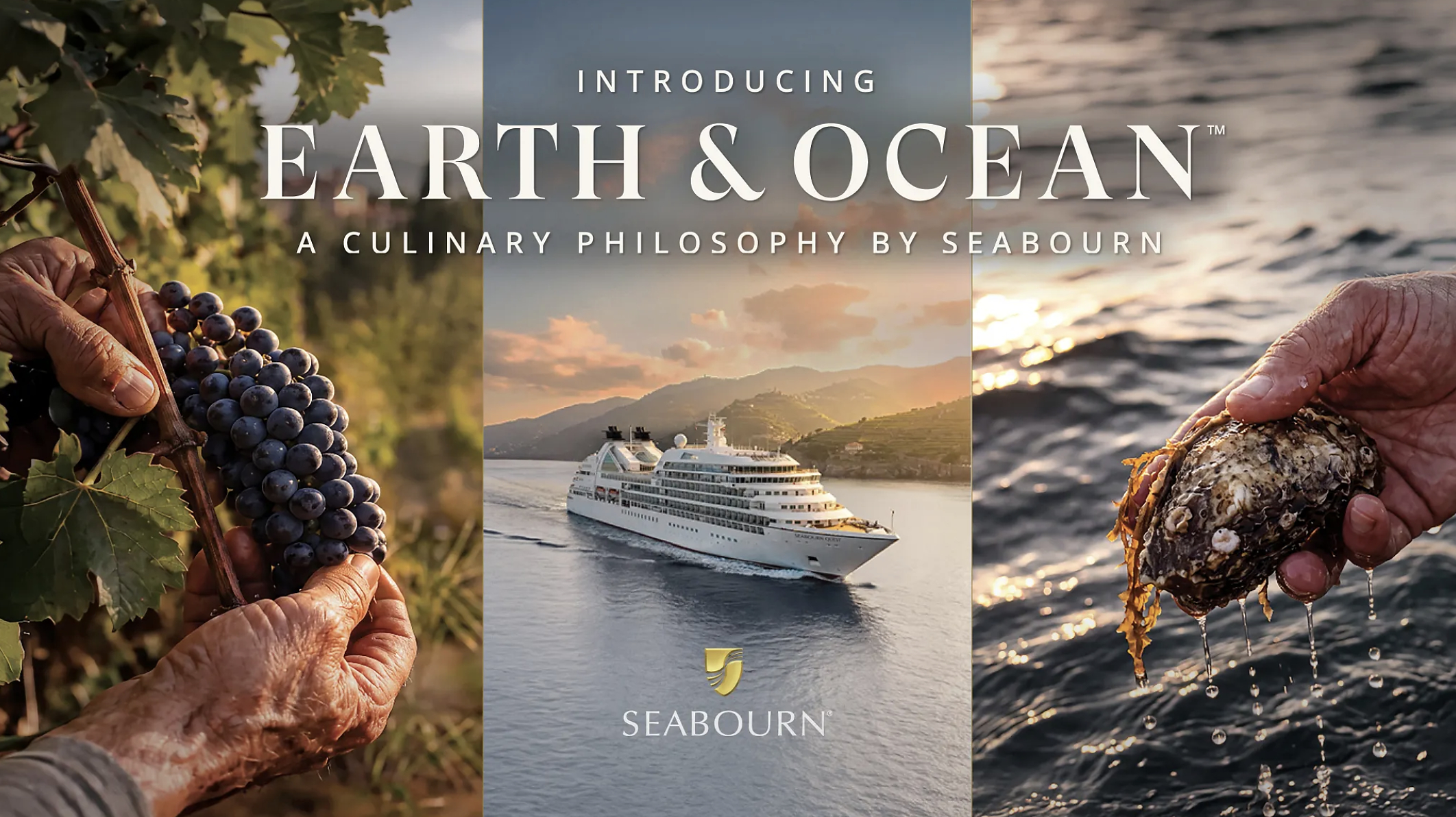
Luxury cruise operator Seabourn is formalizing a fleet-wide sourcing and menu strategy that puts wild-caught regional seafood at the center of its onboard dining program. The company's newly announced Earth & Ocean philosophy, effective across all five ships, mandates locally inspired menus that mirror the fisheries and coastal food cultures of each port of call — a significant commitment for a cruise line operating in more than 400 destinations globally.
Seafood as the Program's Core
The operational seafood angle is concrete. In Alaska, menus will feature fresh lingcod with buttered spinach and arugula, drawing directly from North Pacific groundfish stocks. Australia and New Zealand itineraries will highlight pink snapper with truffled spaghetti squash — a species sourced from Indo-Pacific waters where both wild-capture and aquaculture production are active. Northern European sailings will carry fresh Arctic char with fingerling potatoes and a lemon-butter caper sauce, a species increasingly farmed in Scandinavian land-based recirculating aquaculture systems (RAS) as well as harvested wild from cold-water rivers.
Beyond plated entrées, Seabourn confirmed that regional seafood boils and an enhanced caviar program will roll out across the fleet over the next 12 months. The line's long-running signature event, Caviar in the Surf, is already a recognized touchpoint for sturgeon-derived and alternative roe products in the cruise hospitality segment. Expanding that caviar program suggests increased procurement volume and potentially broader supplier engagement across roe categories.
Merroir as a Sourcing Frame
Seabourn is invoking the concept of merroir — the marine equivalent of terroir — to explain why sourcing geography matters to flavor and guest experience. In Alaska, mineral-rich glacial meltwater shapes the fat content and texture of wild Chinook and sockeye salmon as well as the sweetness profile of red king crab, one of the most closely managed commercial species in the North Pacific under NOAA quota frameworks. Across the Mediterranean, the philosophy connects local seafood preparations to regional olive cultivation and coastal culinary traditions spanning millennia.
This framing has practical supply-chain implications. A "Chef's Market Finds" program — in which each ship's kitchen team sources ingredients from the regions being visited — requires cold-chain agility, port-by-port supplier relationships, and procurement flexibility that a rigid centralized purchasing model cannot accommodate. For seafood suppliers operating in port cities along Seabourn's itineraries, the program represents a potential value-added, small-batch sales channel distinct from bulk contract supply.
Procurement and Operator Outlook
Michael Stendebach, Seabourn's Senior Vice President, Guest Experience & Product Development, framed the expansion as a direct response to guest research identifying locally inspired cuisine and destination connection as top culinary priorities. The Earth & Ocean concept originated as a single restaurant aboard ship in 2018 before being scaled into a fleet-wide philosophy — a trajectory that typically signals growing procurement commitments rather than shrinking ones.
For seafood suppliers, the program's rollout timeline — additional menus and programming to be introduced over the next year — suggests an active period of vendor qualification. Cruise lines at the luxury tier increasingly demand traceability documentation and sustainability credentials from suppliers, and Seabourn's explicit merroir language implies attention to provenance at a level consistent with MSC-certified or similarly verified supply chains.
The broader cruise industry's recovery to pre-pandemic passenger volumes has already driven meaningful increases in foodservice seafood procurement fleet-wide. Luxury operators, who serve a guest demographic willing to pay for premium wild-caught and artisanally sourced product, represent a growing outlet for high-value species including king crab, caviar, and premium finfish. Seabourn's formalized sourcing philosophy could serve as a model others in the sector adopt as destination-dining narratives become standard competitive positioning.
Written by Michael Politz, Author of Guide to Restaurant Success: The Proven Process for Starting Any Restaurant Business From Scratch to Success (ISBN: 978-1-119-66896-1), Founder of Food & Beverage Magazine, the leading online magazine and resource in the industry. Designer of the Bluetooth logo and recognized in Entrepreneur Magazine's "Top 40 Under 40" for founding American Wholesale Floral, Politz is also the Co-founder of the Proof Awards and the CPG Awards and a partner in numerous consumer brands across the food and beverage sector.