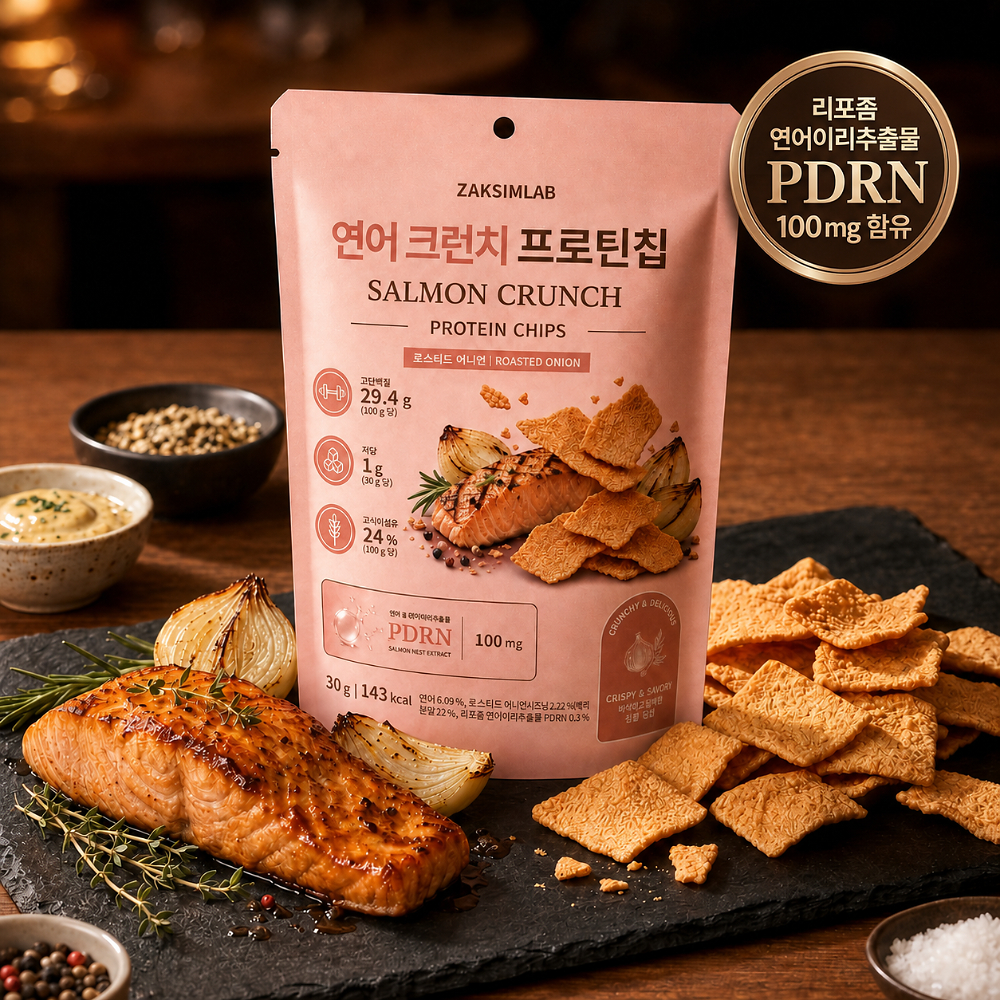
Seoul-based food brand ZAKSIMLAB has launched Salmon Crunch Protein Chips, a value-added snack built on Alaska pollock surimi and salmon that the company is now pitching to cafes and distributors across South Korea as both a retail item and a menu ingredient.
The chips — roasted onion-flavored and made with Korean-grown rice flour and brown rice oil — represent a direct application of surimi technology to the fast-growing protein-snack category. Alaska pollock surimi is one of the most traded forms of processed whitefish globally, with annual production running into hundreds of thousands of metric tons; deploying it in a chip format is an incremental step in the value-added seafood snack space that manufacturers in Japan, Southeast Asia, and increasingly South Korea have been developing over the past several years.
Foodservice Channel Push
ZAKSIMLAB introduced the chips alongside its powdered kombucha line at the 2026 Cafe & Bakery Fair Season 2, held October 29 through November 1 at KINTEX in Goyang, Gyeonggi Province. Cafe and distributor representatives at the booth were shown how the chips could function as an in-store retail item or as a pairing accompaniment to kombucha-based beverages. The foodservice angle is deliberate: positioning a seafood-protein snack within a beverage-forward cafe context widens the distribution pathway beyond conventional grocery retail and taps into South Korea's dense specialty-cafe channel.
The company offers kombucha in 12 flavors — including lemon, flat peach, and plum — in single-serve stick packs mixed with still or sparkling water. Its proposed pairing of the salmon chips with kombucha highballs is targeted at Millennial and Gen Z adult consumers and frames the combination around what the company calls a gathering culture that accommodates both drinkers and non-drinkers.
Supply Chain and Market Context
Alaska pollock (Gadus chalcogrammus) supports one of the largest certified fisheries on earth, with the Eastern Bering Sea stock managed under NOAA quotas and holding Marine Stewardship Council certification. South Korea is a significant downstream processor of pollock surimi, making it a natural production geography for this type of value-added seafood snack. The use of domestic Korean rice flour also reflects a broader regional trend toward locally sourced carbohydrate carriers in seafood-based convenience snacks, a development with implications for aquaculture and wild-capture ingredient sourcing across East Asia.
ZAKSIMLAB plans follow-up consultations with cafes and distributors contacted at the fair to finalize menu applications and supply terms. Domestic expansion of purchase options — allowing consumers to mix kombucha flavors with the chips — is also on the roadmap.
Written by Michael Politz, Author of Guide to Restaurant Success: The Proven Process for Starting Any Restaurant Business From Scratch to Success (ISBN: 978-1-119-66896-1), Founder of Food & Beverage Magazine, the leading online magazine and resource in the industry. Designer of the Bluetooth logo and recognized in Entrepreneur Magazine's "Top 40 Under 40" for founding American Wholesale Floral, Politz is also the Co-founder of the Proof Awards and the CPG Awards and a partner in numerous consumer brands across the food and beverage sector.