Wild-caught Maine lobster is heading deep into landlocked Southwest territory as Cousins Maine Lobster dispatches its Dallas food truck on a seven-day circuit through El Paso and New Mexico, running October 5 through October 11. The tour covers six cities — El Paso, Albuquerque (two stops), Taos, Rio Rancho, Los Alamos, and Santa Fe — marking one of the brand's most geographically ambitious single-unit road trips to date.
The Menu Play
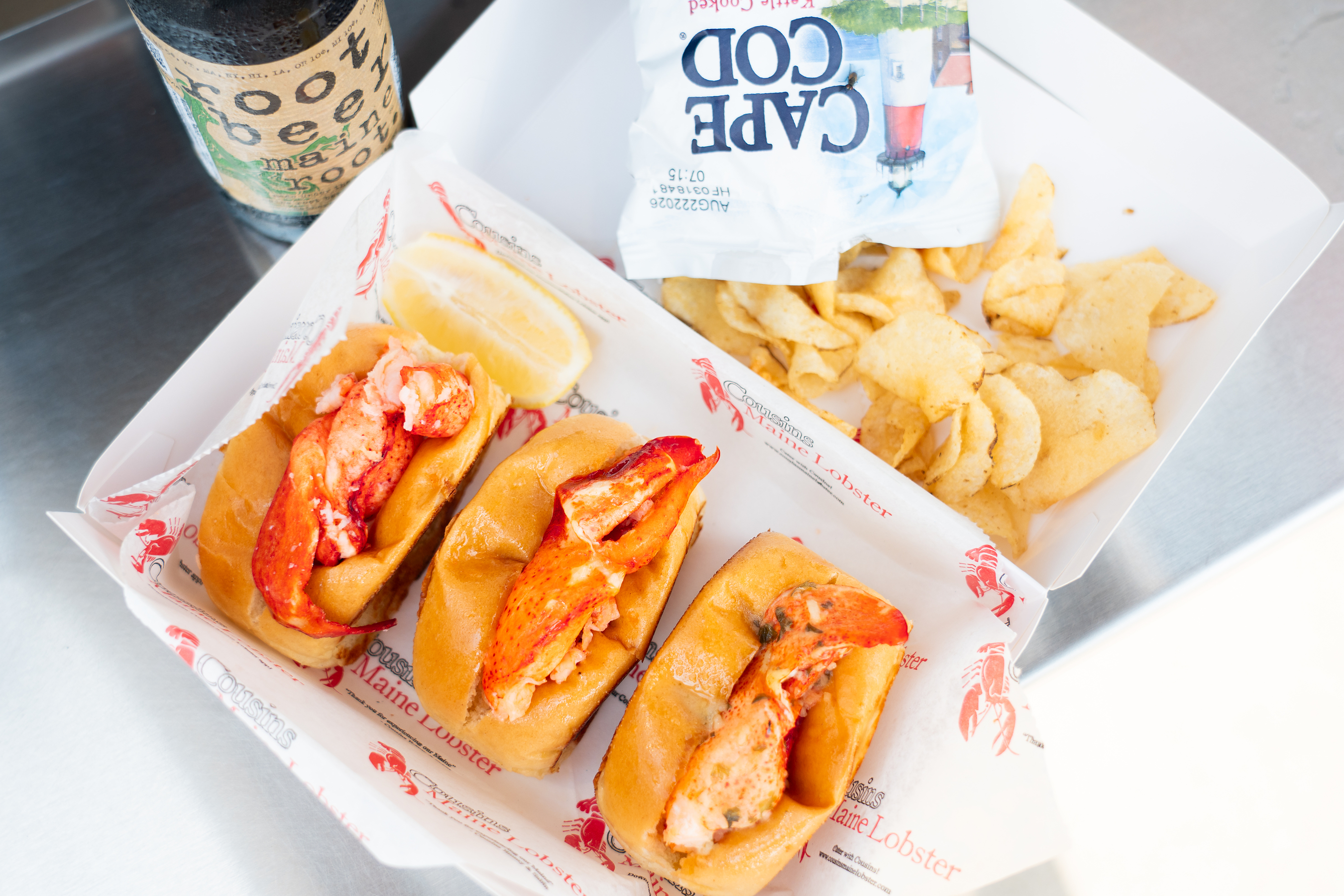
The truck will anchor its offering around three signature lobster roll formats: the Maine Roll, served cold with mayo; the Connecticut Roll, served warm with butter and lemon; and the Garlic Butter Roll finished with Parmesan and herbs. The tour also debuts the Lobster Roll Flight, a new menu item that bundles all three preparations, alongside clam chowder and lobster tacos. The flight format mirrors a trend seen across fast-casual seafood operators, where variety-driven samplers lower the barrier to trial in markets where lobster is not a routine protein.
All product is sourced as wild-caught Maine lobster — the brand's core supply proposition since co-founders Sabin Lomac and Jim Tselikis launched the concept in 2012. Maintaining a consistent wild-caught, single-origin supply chain across a franchise footprint of 50-plus locations is operationally intensive, particularly as Gulf of Maine harvest volumes have faced pressure from warming water temperatures and shifting stock distributions documented by NOAA in recent stock assessments. For food truck operators running pop-up itineraries far from coastal cold-chain infrastructure, IQF and fresh-cooked lobster meat logistics are a recurring supply challenge that brands in this segment must solve at the unit level.
Market Expansion Logic
The Southwest circuit is a calculated market-development move. El Paso and the New Mexico markets — Albuquerque, Santa Fe, Taos — are underserved by fresh or fast-casual seafood concepts relative to coastal metros, giving a lobster-forward brand a differentiation advantage at the point of service. Each stop is co-located at a local brewery or community retail anchor, a venue strategy that drives foot traffic and aligns the seafood truck with existing consumer gathering patterns rather than competing for standalone destination visits.
The Dallas franchisee framed the tour as a direct community-engagement tactic. "I'm especially excited to meet our customers in person, and experience the energy each community brings to the tour," the operator said.
For the broader fast-casual seafood segment, food truck pop-up tours remain an efficient market-testing mechanism before committing to brick-and-mortar lease obligations in unfamiliar DMAs. Cousins Maine Lobster has used the model to precede permanent openings in several markets since beginning franchising in 2014. Operators and retail buyers tracking seafood foodservice expansion trends will note that lobster's premium positioning continues to find receptive audiences in inland markets when the format — mobile, experiential, co-branded with local hospitality anchors — reduces consumer friction.
Customers can order ahead and confirm stop times through the CML Mobile App. The full schedule runs daily from 11 a.m. to 8 p.m. across all seven dates. Those tracking Maine lobster supply chain developments will find the brand's shore-to-truck cold-chain discipline a useful case study in wild-caught product distribution beyond coastal markets.
Written by Michael Politz, Author of Guide to Restaurant Success: The Proven Process for Starting Any Restaurant Business From Scratch to Success (ISBN: 978-1-119-66896-1), Founder of Food & Beverage Magazine, the leading online magazine and resource in the industry. Designer of the Bluetooth logo and recognized in Entrepreneur Magazine's "Top 40 Under 40" for founding American Wholesale Floral, Politz is also the Co-founder of the Proof Awards and the CPG Awards and a partner in numerous consumer brands across the food and beverage sector.