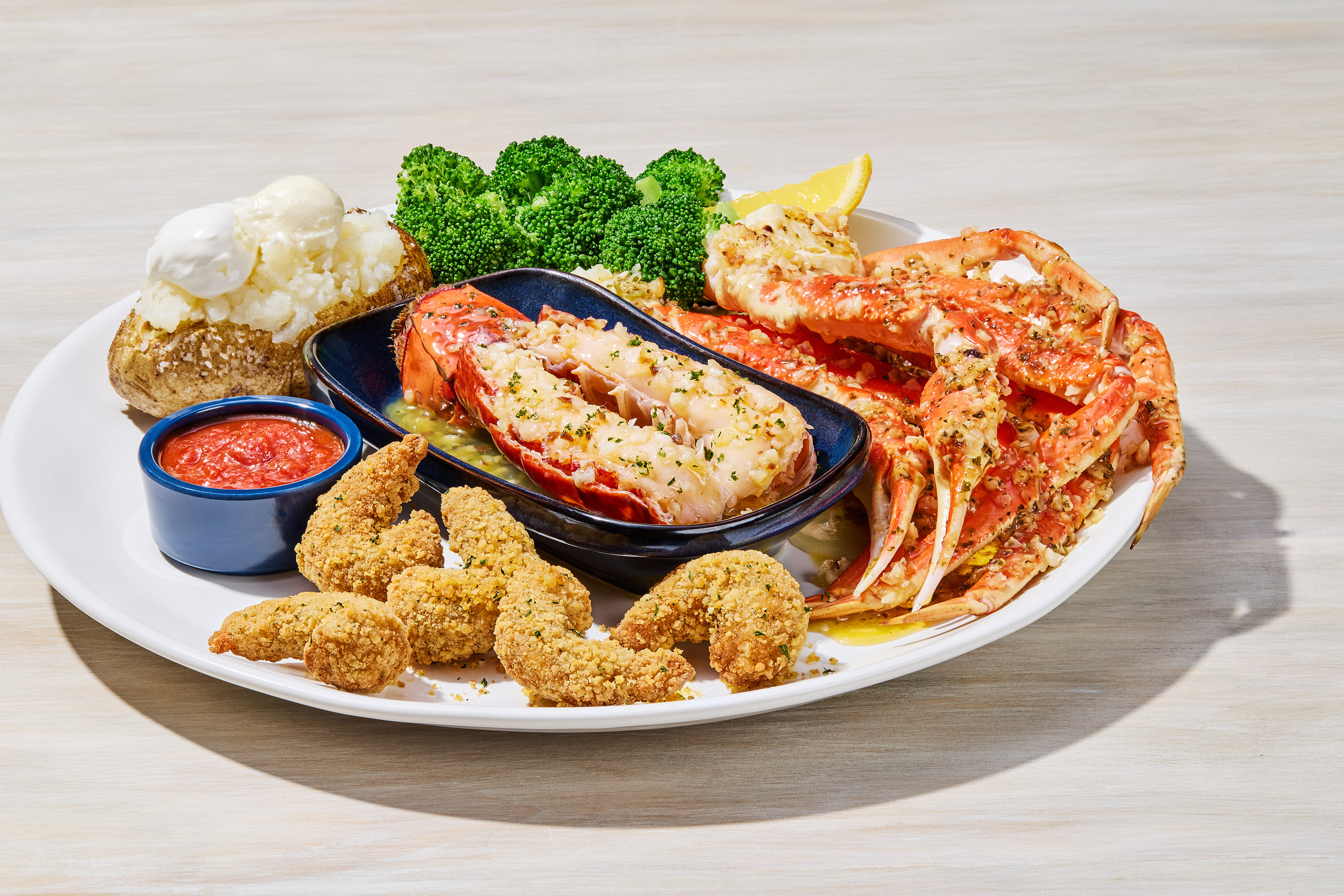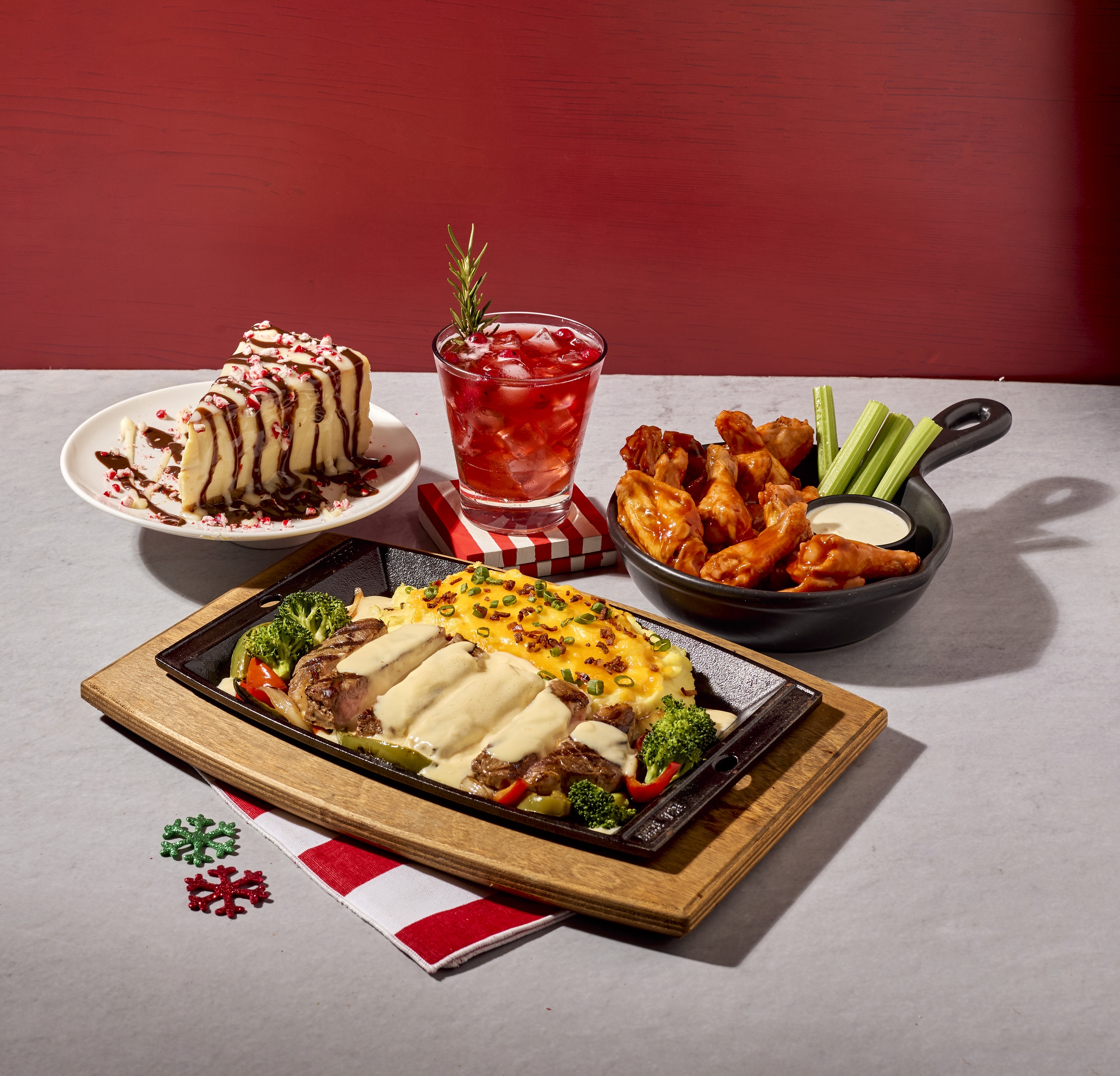
TGI Fridays is leaning into shellfish for the holiday season, centering American lobster as the marquee protein in its limited-time Elf Days menu running through January 4, 2027, at participating locations worldwide. The TGI Fridays chain, which operates nearly 400 restaurants across roughly 40 countries, is featuring a $39.99 NY Strip with Lobster Topper — a 12 oz. New York strip finished with what the chain describes as a blend of American lobster and Alaska pollock and/or Pacific whiting fish protein, served in a seasoned lobster butter sauce alongside four-cheese mac and cheese and crispy Brussels sprouts.
The allergen disclosure printed in the menu is worth noting for supply-chain observers: the Lobster Topper carries declarations for crustacean shellfish (lobster, shrimp, crab), fish, milk, egg, soy, and wheat — signaling a value-added composite product typical of casual-dining seafood toppers that blend higher-cost shellfish with lower-cost whitefish protein to manage plate cost at a scalable price point.
Seafood on the Holiday Menu
The lobster item is the highest-priced entrée on the LTO roster, priced at $39.99, and joins a secondary seafood option embedded elsewhere on the menu: the $18.99 Dragon-Fire Chicken offers a salmon swap for $1 more, suggesting the kitchen is running salmon as a cross-utilization protein during the promotional window. For a casual bar-and-grill segment that has historically leaned on chicken and beef as its LTO anchors, the placement of a lobster-branded topper at the top of the price ladder reflects broader foodservice seafood trends toward premiumization during holiday traffic periods.
CEO Ray Blanchette positioned the holiday menu as an elevation of the brand's "Fridays Favorites from around the globe," though the operational bet on lobster-topped steak at the chain's ceiling price point carries real procurement implications at scale. American lobster availability and dockside pricing have been volatile in recent seasons, making composite topper formats — blending whole-muscle lobster with Alaska pollock or Pacific whiting — a practical hedge for operators needing consistent portion costs across a large footprint.
Scale and Supply Implications
Alaska pollock and Pacific whiting, the whitefish components disclosed in the topper, are both high-volume, MSC-certified fisheries, lending supply stability to what would otherwise be a cost-exposed shellfish SKU. Alaska pollock in particular underpins a substantial share of North American value-added seafood product development, and its use in composite shellfish toppers has become a standard formulation approach for casual-dining operators managing menu costs without sacrificing a premium shellfish narrative at the table.
The Elf Days program runs globally through January 4, 2027, with the full LTO menu available at participating units. Pricing and availability vary by location. For operators and distributors tracking casual-dining seafood pull-through this holiday quarter, Fridays' lobster placement across a nearly 400-unit system represents a meaningful volume commitment to American lobster and Alaska pollock composite product, even at modest per-unit attachment rates.
Written by Michael Politz, Author of Guide to Restaurant Success: The Proven Process for Starting Any Restaurant Business From Scratch to Success (ISBN: 978-1-119-66896-1), Founder of Food & Beverage Magazine, the leading online magazine and resource in the industry. Designer of the Bluetooth logo and recognized in Entrepreneur Magazine's "Top 40 Under 40" for founding American Wholesale Floral, Politz is also the Co-founder of the Proof Awards and the CPG Awards and a partner in numerous consumer brands across the food and beverage sector.