For restaurant and dining professionals, the sourcing conversation is evolving. Where you source wine matters as much as how you build a wine program. The Traverse Wine Coast—anchored by the Leelanau and Old Mission Peninsulas in northwest Michigan—sits at the same latitude as Bordeaux and Piedmont, yet remains one of North America's most overlooked appellations for sommelier partnerships and wine-pairing cuisine.
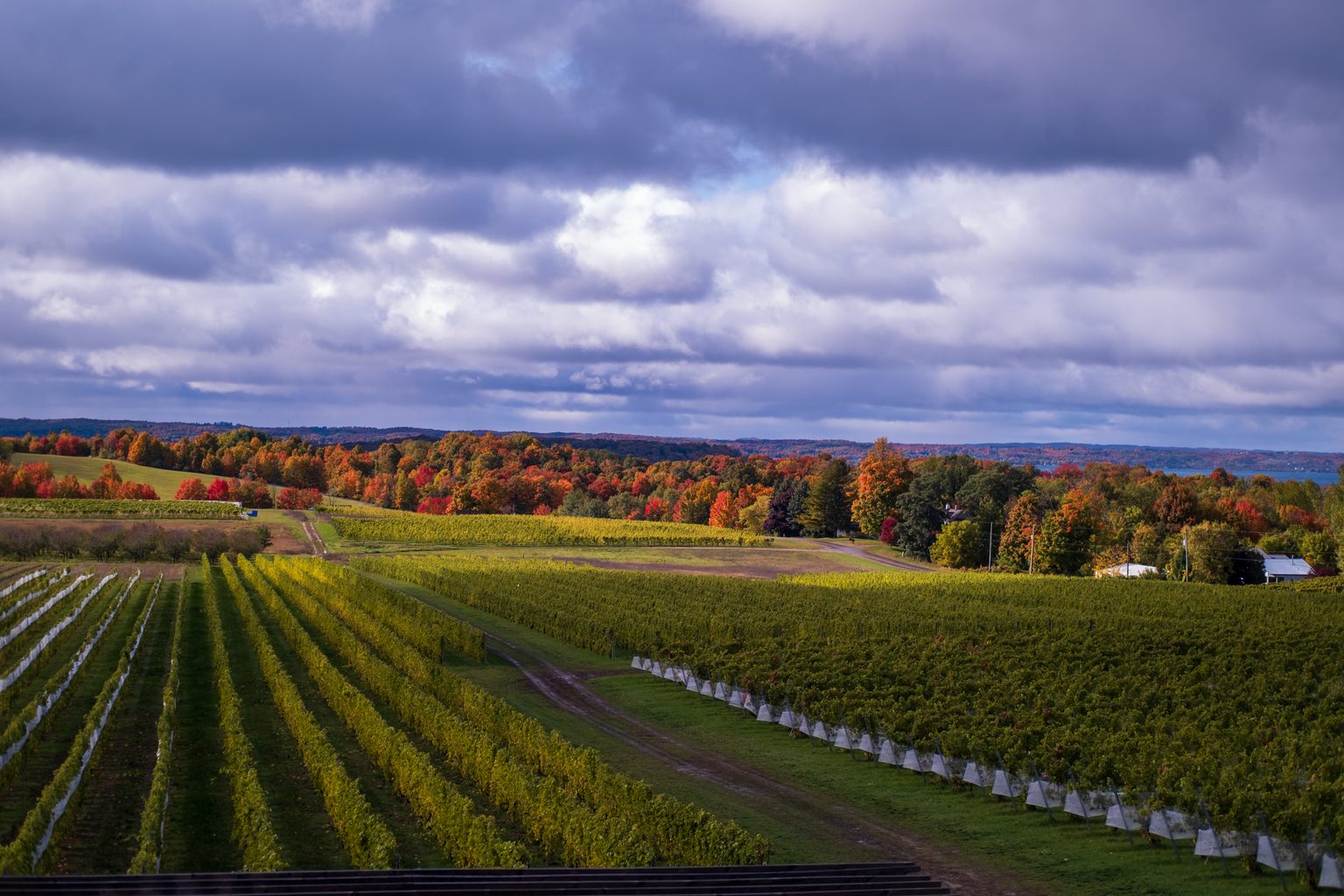
The geography is the story. Both peninsulas are shaped by glacial movement and surrounded by Lake Michigan and Grand Traverse Bay, which moderate temperature, reduce frost risk, and extend the growing season. The result: wines with the structure, bright acidity, concentrated aromatics, and balance that work brilliantly in a dining context without requiring the premium pricing of established regions.
What These Wines Bring to Your Program
Old Mission Peninsula produces grapes in well-drained sandy soils that yield elegant Cabernet Franc, floral Gewurztraminer, and sparkling wines with the tension and complexity that elevate a tasting menu. At nineteen miles long and flanked by water on both sides, the terroir is distinct and defensible to guests looking for provenance with a story.
Leelanau Peninsula delivers glacial soils producing Riesling that rivals German producers, alongside Chardonnay and Pinot Noir with cooler-climate Burgundian logic. These wines pair naturally with contemporary farm-to-table cuisine—the very approach many fine dining establishments are building their concepts around.
Building Producer Relationships
The region's scale is an asset. Most producers ship directly, and those that don't coordinate easily through regional channels. This accessibility creates real partnership opportunities for wine directors and chefs. Over twenty direct flights connect the region to major cities, and Chicago sits within a five-hour drive, making producer visits and menu development trips feasible. Winery farm stays offer the rare opportunity to align your sourcing story with the actual place—crucial for credibility when presenting wines to guests.
The Traverse City Event and Beyond
This August, the region hosts the second annual Traverse City Food & Wine Event, drawing James Beard-recognized chefs and the wines of both peninsulas across farm settings. For dining professionals, this is a primary sourcing and networking opportunity that demonstrates the caliber of culinary talent and producer quality now operating in the region.
Traverse Wine Coast resists being treated as a single-visit destination, and the same applies to wine selection. A thoughtful program might feature multiple producers across both peninsulas, rotating seasonally. Farm-to-table dinners, wine education events, and pairing menus built around the region's portfolio create content that justifies premium pricing and guest engagement. The wines don't mimic established regions—they complement them, filling gaps in cooler-climate varietals and offering economic value without sacrificing quality.
The comparison to Napa or Sonoma is inevitable, but those regions are finished stories, known quantities. Traverse Wine Coast is still being written. For a restaurant seeking to position itself ahead of broader market trends while offering guests wines they can't find elsewhere, that's precisely the advantage. Building your program now establishes you as a curator rather than a follower.
Traverse Wine Coast spans the Leelanau and Old Mission Peninsulas in northwest Michigan. For planning information and producer contacts, visit traversecity.com/traverse-wine-coast.