Restaurant and hospitality professionals face an evolving challenge: today's diners demand beverages that deliver functional benefits while reflecting premium, intentional lifestyles. The energy drink category is experiencing a significant shift away from traditional high-caffeine formulations toward plant-based, clean-label options that drive guest satisfaction and repeat visits.
Lotus was built around a foundational belief that resonates with upscale hospitality operators: A beverage is an accessory; it should be intentional, stylish, expressive, and deliver on its promise of efficacy. By combining plant-powered ingredients, premium design, and the iconic Lotus philosophy of Life in Balance, Lotus has created more than a beverage—it has created an identity that hospitality professionals can confidently feature on their menus.
For decades, the energy drink category was built around speed, stimulation, and performance alone. Consumers were trained to choose products based on caffeine content or flavor names. Lotus saw an opportunity to approach energy differently—one that aligns with the modern diner's expectations for quality ingredients and thoughtful sourcing.
Plant-Based Formulation Meets On-Premise Standards
At the center of every Lotus Plant Power drink is Plant Power 7™ (PP7™), the brand's proprietary blend of certified organic plant-based ingredients. The formula brings together functional botanicals including green coffee beans, guayusa, green tea extract, coffee fruit, elderberry, Jerusalem artichoke, and ashwagandha KSM-66.
This ingredient profile addresses a critical need for dining professionals: guests increasingly read labels closely, seek products reflecting their lifestyle values, and want to feel good about what they consume. Clean-label beverages have become a menu expectation in premium establishments, and Lotus delivers the functional transparency that builds guest trust and loyalty.
The brand also understood something equally important: better ingredients only matter if guests actually want to order the product. Consumers don't just want clean labels. They want products that fit their lifestyle, reflect their identity, and create an experience they enjoy returning to. That is why Lotus was designed to deliver more than functional energy.
Many consumers have come to refer to it as the Lotus Glow™, the idea that energy is more than a feeling. It is reflected in how people connect, create, move, and express themselves throughout the day. For Lotus, the ingredients create the foundation. The energy experience creates the glow.
Design-Driven Packaging as a Merchandising Tool
In competitive dining environments, beverage presentation directly influences guest choice and perceived value. Lotus took a distinctive approach to packaging that hospitality professionals should understand.
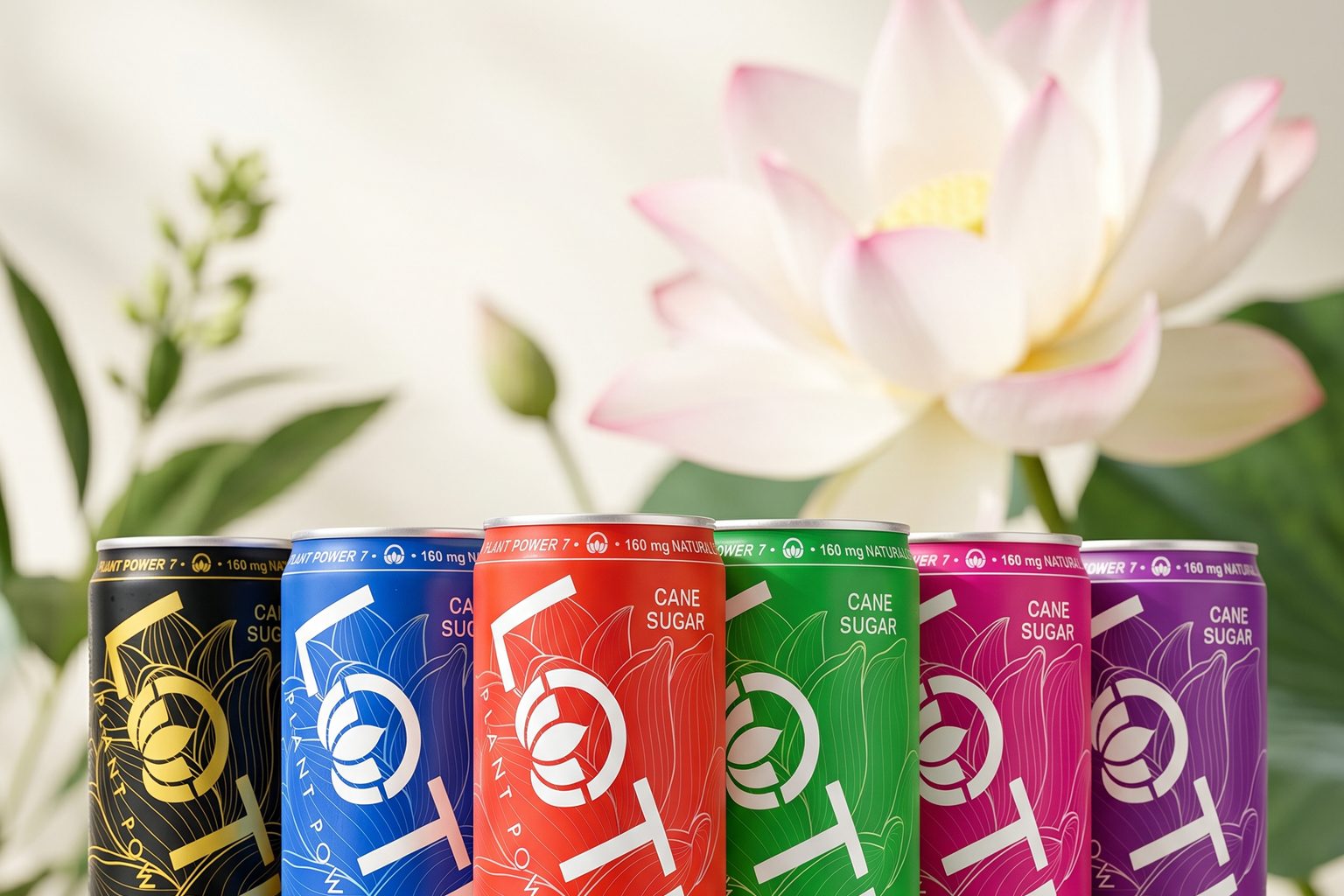
Most beverage brands build packaging around specific flavors. One can is watermelon. Another is cherry lime. Another is tropical citrus. The flavor becomes the identity. Lotus took a different approach. The brand's colors are not treated as temporary flavor labels. They are treated as part of a larger visual language: Pink Lotus, Blue Lotus, Green Lotus, Red Lotus, Purple Lotus, Gold Lotus.
Each color becomes instantly recognizable while still giving guests room to decide what it means to them. For one person, Pink Lotus may feel bright, expressive, and fun. For another, it may simply be the color they are drawn to that day. Blue may feel refreshing to one consumer and powerful to another. The interpretation belongs to the individual—and that flexibility drives trial and repeat orders.
Rather than creating a completely different visual identity for every flavor, Lotus built a consistent packaging architecture that allows color to become the hero. In a category where packaging often changes dramatically with every flavor launch, Lotus has created a more enduring system. The approach has earned recognition for packaging design and shelf presence within one of the most competitive categories in beverage.
Premium Beverage Merchandising in the Modern Restaurant
Great packaging does more than communicate information. It creates an identity. Lotus was designed to deliver a premium beverage experience, something a guest wants to hold, photograph, carry, and identify with—making each can feel like an accessory.
The goal is not just to stand out on the shelf or cooler. The goal is to evoke curiosity and drive premium pricing. By designing the can as a visual statement, hospitality professionals can leverage Lotus as part of their overall beverage merchandising strategy, encouraging guests to perceive greater value and willingness to pay.
The color philosophy behind Lotus is rooted in the symbolism of the lotus flower itself. The lotus flower has long been associated with balance, vitality, and growth. Those qualities continue to inspire the Lotus brand today, influencing everything from product formulation to the vibrant color system that defines the portfolio. That same philosophy influences the way Lotus thinks about color, drawing inspiration from the relationship between color, energy, and self-expression while keeping the consumer experience modern, accessible, and mainstream.
Building Brand Loyalty Through Intentional Choices
The future of energy in on-premise beverage programs is not simply about more caffeine. It's about a direct relationship with the consumer that projects their image and values. By combining PP7™ with a color-driven packaging system, Lotus connects what is inside the can with how guests express themselves on the outside.
By designing energy around color, plant-powered ingredients, personal expression, and a philosophy centered on life in balance, Lotus has created something increasingly rare in the beverage aisle: a beverage accessory that looks and feels as intentional as the guests who choose it. For hospitality professionals seeking to elevate their beverage programs and meet contemporary guest expectations, Lotus represents a strategic opportunity to align premium positioning with functional credibility.