The Sustainability Shift Seafood sustainability has moved from environmental conversation to core business issue for restaurants, hotels, retailers, and foodservice operators. It is now part of purchasing, menu development, brand trust, compliance, and consumer confidence. Modern guests are no longer asking only "Is it fresh?" but "Where did it come from?" and "Was it responsibly harvested?" According to the Food and Agriculture Organization of the United Nations, global fisheries and aquaculture production reached 223.2 million tonnes in 2022, including 185.4 million tonnes of aquatic animals and 37.8 million tonnes of algae. For the first time, aquaculture surpassed capture fisheries as the main source of aquatic animals for human consumption.
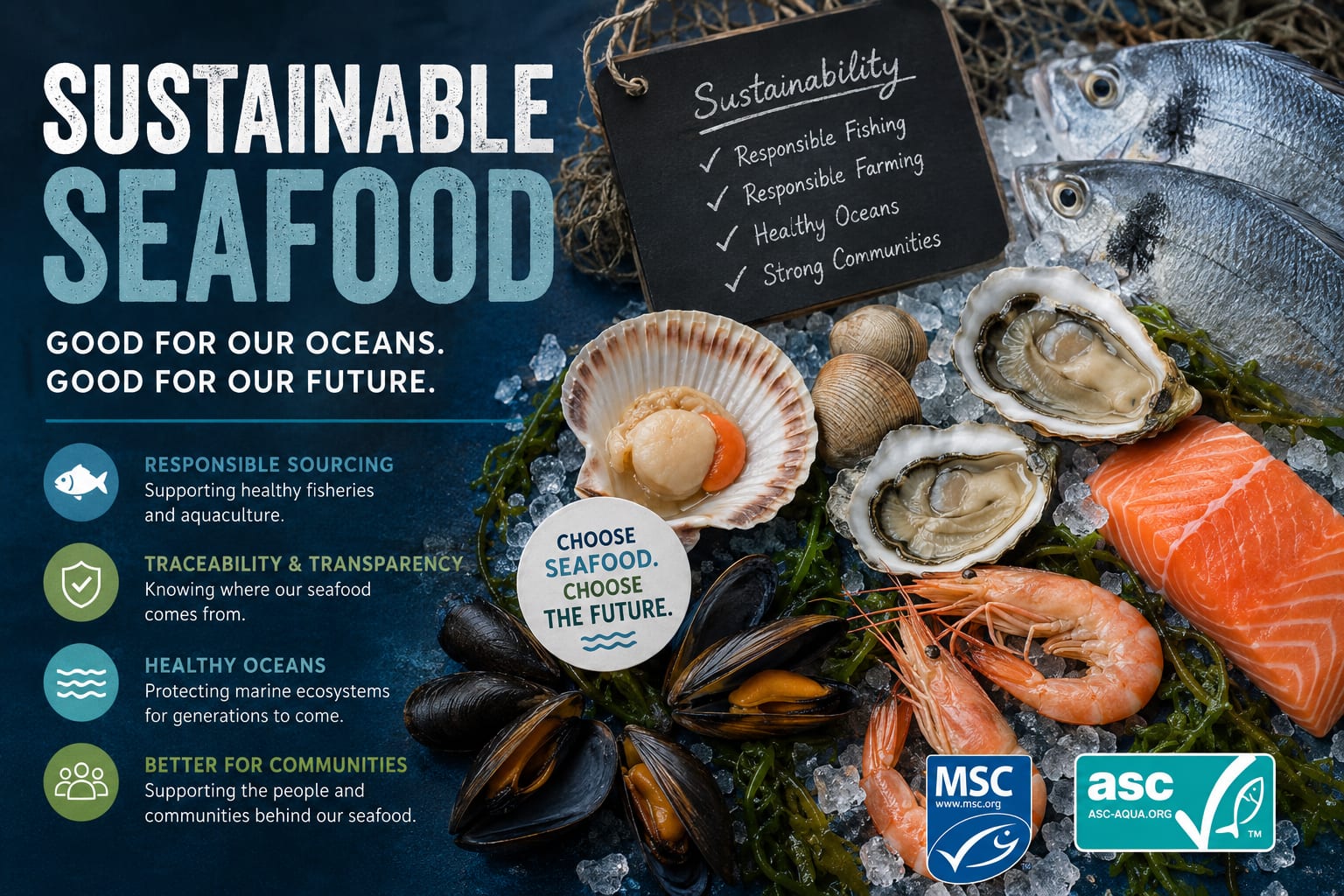
Accountability Requires Traceability Sustainable seafood means seafood harvested or farmed in ways that protect long-term health of species populations and ecosystems. For operators, that translates to procurement discipline. A restaurant cannot simply label items "sustainable seafood" without sourcing records, distributor relationships, certifications, harvest methods, and traceability data. Seafood supply chains are complex. A fish may move from vessel to dock, processor, importer, distributor, cold storage, kitchen, and plate. At every stage, the risk of mislabeling, commingling, quality loss, and incomplete data increases. Certifications like the Marine Stewardship Council's Chain of Custody Standard and the Aquaculture Stewardship Council framework provide common language for buyers and help chefs make informed decisions. The MSC blue fish label ensures seafood can be traced back through certified businesses to a certified sustainable fishery. ASC standards cover environmental and social criteria, including biodiversity, fish health, responsible medicine use, worker conditions, and community impact.
Farmed Seafood as Solution Wild fisheries alone cannot satisfy global seafood demand.
The question for operators should not be "Is farmed seafood good or bad?" but rather "How was this seafood farmed?" Responsibly farmed oysters, mussels, clams, trout, salmon, shrimp, and seaweed products can be excellent sustainability choices when produced under strong standards. Shellfish and seaweed are gaining attention because they fit into menus while telling a compelling environmental story. They are versatile, profitable, and increasingly aligned with consumer interest in lighter, climate-conscious dining.
Menu Diversity Drives Sustainability Many menus rely on the same familiar species: salmon, tuna, shrimp, cod, lobster, and crab. Relying on a small group of high-demand species creates pressure on supply chains and limits innovation. Chefs can shift demand by introducing guests to underutilized, seasonal, and local species. A strong seafood program can include smoked fish dips, clam toast, mussel bowls, fish collars, seafood conservas, chowders, ceviche, and regional catch features. Lesser-known species often provide stronger food costs, better local sourcing narratives, and more distinctive guest experiences.
Traceability Becomes Regulatory The FDA's Food Traceability Final Rule establishes additional recordkeeping requirements for certain seafood categories. While the original compliance date was January 20, 2026, the FDA has directed enforcement not to occur before July 20, 2028. Operators should establish disciplined basics now: approved vendor lists, product specifications, invoices that include origin and species data, certification documentation, lot information where available, and staff training. For multi-unit groups, hotels, casinos, cruise lines, and institutional foodservice, seafood traceability should be part of risk management. The Global Dialogue on Seafood Traceability is standardizing digital traceability through common data elements and interoperable systems, creating clearer pathways for supply chain information exchange.
Lead With Flavor Operators should avoid turning sustainability into a lecture.
Guests do not go to restaurants to be scolded. The most effective sustainable seafood programs lead with deliciousness and support the story with sourcing. Specific, appetizing menu language builds trust: "Roasted U.S. farmed trout with lemon brown butter." "MSC-certified cod fish & chips with malt vinegar aioli." "Local oysters with cucumber mignonette." "Domestic shrimp roll with Old Bay aioli and celery leaf."
Immediate Actions Ask suppliers for species, origin, harvest method, farm or fishery name, certification status, and traceability documentation. Build seasonal flexibility into menus so chefs can shift when supply or sustainability status changes. Train servers to explain seafood in plain language. Feature more shellfish, seaweed, domestic products, and well-managed alternatives. For restaurant groups and hospitality companies, sustainable seafood can become a brand pillar that supports corporate responsibility goals, strengthens supplier partnerships, improves menu storytelling, and creates a more resilient supply chain.
Why It Matters
Operators that embed sustainable sourcing into purchasing workflows now will avoid future compliance friction while building consumer trust and supply chain resilience. Specificity in sourcing and menu language differentiate brands and create server talking points that enhance perceived value—turning sustainability from compliance burden into competitive advantage.
For more insights and trends in the food and beverage sector, check out more articles in The Food & Beverage Magazine family of publications.
Written by FBM Publications Editors